I have, with all due respect to the craft of Kurt Busiek, strongly disapproved of the new "sword of sorcery" direction for the Aquaman title (not "for Aquaman", since Aquaman himself's not going to be in it). But why?
Naturally, some of it is just personal taste, but I think there are some objective reasons as well. But, first, some background on my personal "comic book theories".
There are, pretty much, only five of what I call "Goldens"-- DC heroes who, having survived the Wertham-driven putsch of comics, continued more or less untouched through the Golden, Silver, and Bronze ages.
Those five are Superman, Batman, Wonder Woman, Green Arrow (*snort*), and Aquaman. The first three survived on the strength of their popularity and malleability of tone, and the last two survived as back-up features sneaking under the radar (or, in Aquaman's case, sonar). Any other characters were discontinued, dramatically reimagined by Schwartz, or both. Their resultant high Q Rating is why these characters were chosen to be "The Superfriends". Except, of course, for Green Arrow. I mean, really. One can only handle so many Plastic Cat Arrows without getting scratched, you know.
One of the secrets to their success is versatility. The Trinity of Superman, Batman, Wonder Woman have an advantage that we're so familiar with that most of us no longer even notice it: each one has a diverse set of abilities. Batman can do anything humanly possible; Superman can do everything else. Wonder Woman was saved from being just a strongwoman by some clever additions, such as the plane, the lasso, and her persuasive abilities. Conceptually, their powers aren't just physical but are perceptional as well (Batman's deduction, Superman's senses, Wonder Woman's lasso of truth). Practically, they have short-range abilities (ZOWIE!) and long-range abilities (the batarang, heat vision, the lasso).
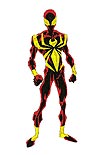 This broadness helps make them adaptable to a variety of situations, storylines, and tones. As any Heroclix player can tell you, it's much better to have a strong all-around figure on the board than a Johnny One-Note. Non-DC characters with similar diversity of power have also shown staying power. Spider-Man is a brilliant example, with his hyperstrength and agility, wallcrawling, high intelligence, webshooters, and "spider-sense"; a nearly perfect ensemble of powers. It almost doesn't matter what they do with Spider-Man, so cool is the very idea of being able to do what he can do. ... Almost.
A narrower range of powers often means less success, in comic book battles, on the Heroclix board, or in the court of public opinion. Green Arrow and Green Lantern are basically ranged fighters (one of the reason the writers have Hal Jordan get hit on head so much; he's vulnerable only at close range). To make Black Canary and Flash more viable, they got the sonic scream and the "tornado-making trick", which give them the ability to fight from a distance.
One-noters like the Atom don't fair so well. While Aquaman has a good mix of physical/mental and short/long range abilities, he has a limited sphere for using them (as a million not- so-funny comedians like to remind us). An additional problem for guys like Atom and Aquaman is that, pound for pound, there's not that much crime at the molecular or submarine level.
Result? Such characters are harder to carry off as traditional "yes, Commissioner, I'll go after the Checkered Gang at once!" kind of superheroes. Sometimes this drives writers to try to change the conditions the hero operates under; Will Pfeiffer's Sub Diego and, before it, the now-forgotten New Venice were attempts to give Aquaman a more familiarly urban context for crimefighting, allowing for a more conventional approach to the character.
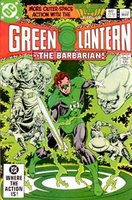
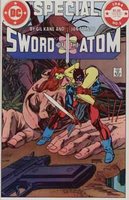 Sometimes it drives them to change the hero's genre all together. Julie Schwartz recast Golden Age adventurer Hawkman and crimefighter Green Lantern as space characters. Or, if a character's not working as a traditional superhero and already has some elements of the fantastic, try the "sword & sorcery" genre: hence, Sword of the Atom and Sword of Atlantis.
While such moves may breathe in some temporary life, they aren't sustainable solutions, I think. Just ask Jonah Hex. And before some of you object about the success of the Silver Age Hawkman and Green Lantern, I'll point out that the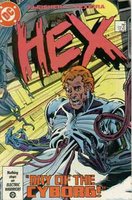 current popularity of these characters is based solidly in bringing them back down to earth with a more superhero/crimefighter feeling to them.
Personally, I like Aquaman as an underwater Batman/Superman, because, well, I like Batman and Superman. But I do understand the impulse to take a difference approach with him. I think "sword & sorcery" is the wrong direction, however, because it takes Aquaman farther away from the realm of ordinary human existence, making him feel (to me) less relevant. Part of Aquaman's problem is that he's too far removed from our regular land-based existence; taking him farther away is literally moving in the wrong direction.
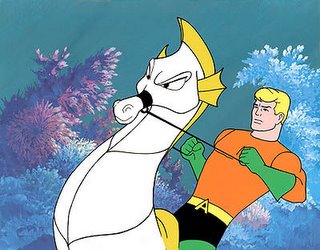 If Aquaman's genre is to be changed it should be changed back to (what my friend Glen has pointed out to me was) its real, original genre: Western.
"Scipio's finally flipped!" you're thinking. Hold on! By "Western" I don't mean guns and tumbleweeds in the American plains; those are just the externals of the genre. I mean, the storytelling essentials: small isolated town with a problem, bands of bandits, corrupt politicians, impoverished working families, the mysterious avenging stranger who rides in to save the day appearing out of nowhere.
Read early Aquaman; it's a Western. Aquaman has no real base of operations, he mostly wanders the sea, suddenly coming across situations that require his talents. He rallies the local townfolk / sealife to repell the threat. He sails off into the sunset.
This is part of the reason Aquaman's has virtually no Rogue's Gallery; that's really an urban crimefighter schtick. Aquaman's more of a Jonah Hex. Without the guns. And the scar. Okay, maybe he's more of a Lone Ranger, but you get the idea.
Aquaman, back in proper "Western" mode, is a perfect vehicle for interesting one-issue stories, which can be set anywhere the sea is. Aquaman has a power almost everyone (other than sharp-eyed Grant Morrison!) has forgotten; thanks to his telepathy, he can speak the language of anyone he's talking to. He's the perfect worldwide sea-going busybody.
If you need a model for how this is done, just watch old episodes of "Shazam!" or "The Incredible Hulk", which for practical reasons abandoned the standard superhero model in favor of a Western-style, Lone Ranger motif... .
Naturally, some of it is just personal taste, but I think there are some objective reasons as well. But, first, some background on my personal "comic book theories".
There are, pretty much, only five of what I call "Goldens"-- DC heroes who, having survived the Wertham-driven putsch of comics, continued more or less untouched through the Golden, Silver, and Bronze ages.
Those five are Superman, Batman, Wonder Woman, Green Arrow (*snort*), and Aquaman. The first three survived on the strength of their popularity and malleability of tone, and the last two survived as back-up features sneaking under the radar (or, in Aquaman's case, sonar). Any other characters were discontinued, dramatically reimagined by Schwartz, or both. Their resultant high Q Rating is why these characters were chosen to be "The Superfriends". Except, of course, for Green Arrow. I mean, really. One can only handle so many Plastic Cat Arrows without getting scratched, you know.
One of the secrets to their success is versatility. The Trinity of Superman, Batman, Wonder Woman have an advantage that we're so familiar with that most of us no longer even notice it: each one has a diverse set of abilities. Batman can do anything humanly possible; Superman can do everything else. Wonder Woman was saved from being just a strongwoman by some clever additions, such as the plane, the lasso, and her persuasive abilities. Conceptually, their powers aren't just physical but are perceptional as well (Batman's deduction, Superman's senses, Wonder Woman's lasso of truth). Practically, they have short-range abilities (ZOWIE!) and long-range abilities (the batarang, heat vision, the lasso).
 This broadness helps make them adaptable to a variety of situations, storylines, and tones. As any Heroclix player can tell you, it's much better to have a strong all-around figure on the board than a Johnny One-Note. Non-DC characters with similar diversity of power have also shown staying power. Spider-Man is a brilliant example, with his hyperstrength and agility, wallcrawling, high intelligence, webshooters, and "spider-sense"; a nearly perfect ensemble of powers. It almost doesn't matter what they do with Spider-Man, so cool is the very idea of being able to do what he can do. ... Almost.
A narrower range of powers often means less success, in comic book battles, on the Heroclix board, or in the court of public opinion. Green Arrow and Green Lantern are basically ranged fighters (one of the reason the writers have Hal Jordan get hit on head so much; he's vulnerable only at close range). To make Black Canary and Flash more viable, they got the sonic scream and the "tornado-making trick", which give them the ability to fight from a distance.
One-noters like the Atom don't fair so well. While Aquaman has a good mix of physical/mental and short/long range abilities, he has a limited sphere for using them (as a million not- so-funny comedians like to remind us). An additional problem for guys like Atom and Aquaman is that, pound for pound, there's not that much crime at the molecular or submarine level.
Result? Such characters are harder to carry off as traditional "yes, Commissioner, I'll go after the Checkered Gang at once!" kind of superheroes. Sometimes this drives writers to try to change the conditions the hero operates under; Will Pfeiffer's Sub Diego and, before it, the now-forgotten New Venice were attempts to give Aquaman a more familiarly urban context for crimefighting, allowing for a more conventional approach to the character.

 Sometimes it drives them to change the hero's genre all together. Julie Schwartz recast Golden Age adventurer Hawkman and crimefighter Green Lantern as space characters. Or, if a character's not working as a traditional superhero and already has some elements of the fantastic, try the "sword & sorcery" genre: hence, Sword of the Atom and Sword of Atlantis.
While such moves may breathe in some temporary life, they aren't sustainable solutions, I think. Just ask Jonah Hex. And before some of you object about the success of the Silver Age Hawkman and Green Lantern, I'll point out that the
 current popularity of these characters is based solidly in bringing them back down to earth with a more superhero/crimefighter feeling to them.
Personally, I like Aquaman as an underwater Batman/Superman, because, well, I like Batman and Superman. But I do understand the impulse to take a difference approach with him. I think "sword & sorcery" is the wrong direction, however, because it takes Aquaman farther away from the realm of ordinary human existence, making him feel (to me) less relevant. Part of Aquaman's problem is that he's too far removed from our regular land-based existence; taking him farther away is literally moving in the wrong direction.
 If Aquaman's genre is to be changed it should be changed back to (what my friend Glen has pointed out to me was) its real, original genre: Western.
"Scipio's finally flipped!" you're thinking. Hold on! By "Western" I don't mean guns and tumbleweeds in the American plains; those are just the externals of the genre. I mean, the storytelling essentials: small isolated town with a problem, bands of bandits, corrupt politicians, impoverished working families, the mysterious avenging stranger who rides in to save the day appearing out of nowhere.
Read early Aquaman; it's a Western. Aquaman has no real base of operations, he mostly wanders the sea, suddenly coming across situations that require his talents. He rallies the local townfolk / sealife to repell the threat. He sails off into the sunset.
This is part of the reason Aquaman's has virtually no Rogue's Gallery; that's really an urban crimefighter schtick. Aquaman's more of a Jonah Hex. Without the guns. And the scar. Okay, maybe he's more of a Lone Ranger, but you get the idea.
Aquaman, back in proper "Western" mode, is a perfect vehicle for interesting one-issue stories, which can be set anywhere the sea is. Aquaman has a power almost everyone (other than sharp-eyed Grant Morrison!) has forgotten; thanks to his telepathy, he can speak the language of anyone he's talking to. He's the perfect worldwide sea-going busybody.
If you need a model for how this is done, just watch old episodes of "Shazam!" or "The Incredible Hulk", which for practical reasons abandoned the standard superhero model in favor of a Western-style, Lone Ranger motif... .