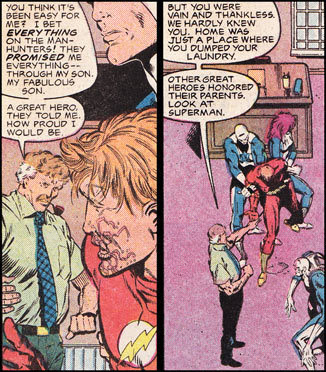
A thoughtful anonymous commenter ("AC") on this blog recently said (in reply to a recent post about mishandling of DC characters under Dan Didio),
"This probably sounds like a hopelessly simplistic take on comics, but I swear it makes sense to me: just write good stories about your characters."
The comment was so heartfelt that it seemed like it merits a reply-in-post, rather than by comment.
As Plato pointed out, "No man knowingly does evil".
 |
| Then again, Plato never met Tom King. |
1. We need to define what constitutes "good". That's part of what this and many of my other posts (such as my screeds against decompression) try to help do.
Sometimes we have to do that by process of elimination: identifying elements that make stories bad. It's why so much fandom--not merely of comics but in general--focuses on negative criticism. It's a natural (if unpleasant) tool in the search for The Good. Because if years spent reading ancient philosophy teaches you anything, it's that "The Good" can be difficult to define quickly and succinctly.
"Just write good stories" runs smack into the wall of that conundrum of ancient philosophy: "What is The Good?"
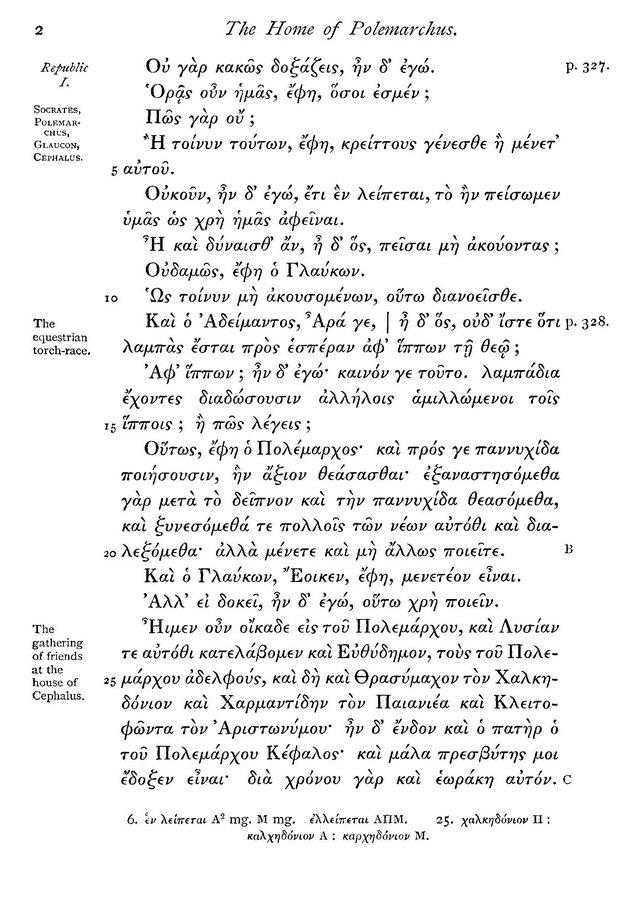 |
| Just like reading Plato's "Republic", which I don't recommend because it'll give you a headache and make you angry. VERY decompressed. Lots of jabbering, no action. Pointless "character moments" with characters who are jerks anyway. You can just read Bendis et al. for that. |
Is adhering to the structural basics of storytelling (as discussed in our next point) "good writing"? I don't think so. I mean, you can drive a car perfectly well, but still use it to do evil things; so, too, with stories.
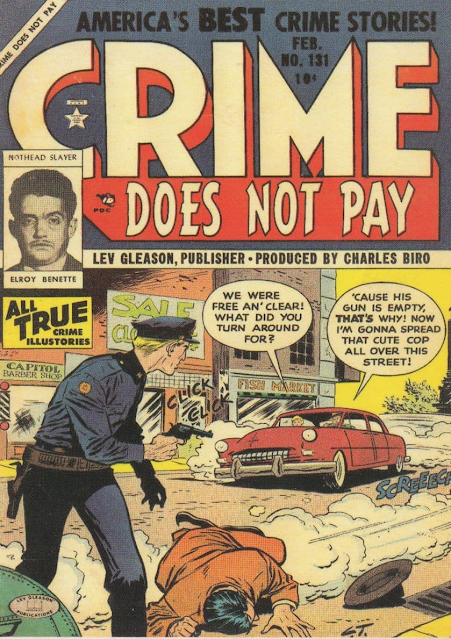 |
| I learned that from Dr. Wertham. |
When the Joker had his own comic book series in the '70s, one of the problems was that the Comics Code--or, if nothing else, the zeitgeist at the time--insisted that the villain not be allowed to get away at the end of the story. So EVERY ISSUE ended with the Joker getting captured (or the implication that he was about to be captured). That's because The Powers That Be felt that a "good story" couldn't end with a villain escaping. Is that something we would all agree on today?
There are other examples where time and place shift what is considered "good" in a story, but instead let's consider character. Some readers feel that good stories will always show Bandanaman acting in character ("Bandanaman would never use a Kleenex; it's against his code."). Some reader feel that good stories show that Bandanaman isn't perfectly predictable; that would make him and his stories boring ("Did you see what Bandanaman did this month?!"). Some readers feel that good stories show that Bandanaman is neither predictable nor unpredictable, but adaptive, and make his choices depending on the situation at hand. ("What do you think about Bandanaman's difficult decision this month?")
 |
| But does anyone care about what Bandanaman thinks...? |
What about taste? I love me some Jonah Hex, the DCU's standout weird western character. The dark ironies, the poetic justice, the small but deep personal drama with an ever changing landscape of characters.
 |
| And there's some special appeal in brawny bondage and branding, done tastefully. |
But others readers do not like those things. To them, the very elements that make a Jonah Hex story good to me are what make it a bad story to them. So, to them, there can be no 'good Jonah Hex story', unless you write one that discards those elements, making it so out of character that a reader like me would say it's 'not a Jonah Hex story at all'.
 |
| I mean, it's not like you can send him into a post-apocalyptic future, or have him befriend Justice Leaguers, or hang out with Space Cabbie. |
I could continue, but I hope you get the point. "Good" is a great concept in the abstract, but it falters as a yardstick for the concrete. Yes, it would be good if everything were just... good. But good is not the same thing in every case, at all times, for every person.
That's not to say that "good" is meaningless as a goal for stories. But we must accept that it is more of a question than it is an answer.
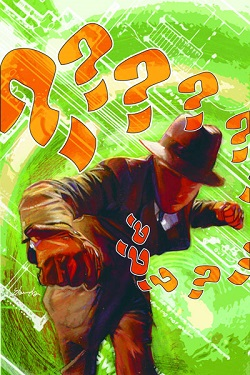 |
| If only I could think of an appropriate philosophical comic book reference for this point. |
2. We need (believe it or not) to continue to define (or at least re-emphasize) what a STORY is. You'd think Aristotle would have covered that sufficiently in The Poetics, but I guess everything needs rebooted for a new millennium.
 |
| I do recommend The Poetics, which will not give you a headache or make you angry. Unlike SOME ancient philosophers, Aristotle knew how to keep it tight. |
Stories have a comprehensible plot, Grant Morrison.
These are all necessary to making a story. But note (as discussed in point 1) they do not necessarily or automatically make a story good.
 |
| If they did, then Dazzler would be the perfect Aristotelian character. |
3. The word "your" in the sentence is a major problem. In fact, it may THE major problem for many modern comics writers. THE CHARACTERS AREN'T THEIRS. They aren't "your characters" Mr/Ms. Writer; they are "the characters".
 |
| Just ask them. |
They do not belong to you. Not legally, historically, culturally, or creatively. They are on loan. They exist already. Many of them, as I pointed out in a recent post, were created before you were, Many will be around long after you are gone.
 |
| I learned that from Mr. Mxyzptlk. |
Your job is to tell stories with the characters, not alter them, and many writers simply can't or won't color within those lines.
When a writer is assigned (or actively chooses!) a character they often have (or are assigned!) the goal of making the character more popular. Sales matter, after all. So they may think, "Why don't some readers like this character? What can I do to make Readers-Who-Do-Like-This-Character like this character?" Since they can't change the readers... they change the character. Maybe they themselves never liked the character; maybe they chose the character because they thought it needed to be changed.
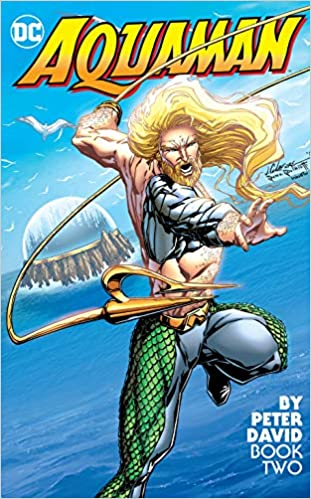 |
| Peter David never MET a character he thought he couldn't improve by simply changing it into a completely different one of his own invention with the same name. If "Tarzan/Namor/Captain Hook rip-off' counts as 'his own invention'. |
It's a natural impulse. It's also usually wrong. If your car doesn't work, trying to turn it into a boat won't either. Just invest in fixing the damned car, or junk it.
Either the character (or group, world, set-up, etc.) are intrinsically, conceptually flawed (in which case, it should be abandoned) or it hasn't been handled correctly (or its past handling is no longer correct with changing times). The answer in the latter case is to handle the character correctly, not alter them essentially. If you change the character so severely that it now appeals to the people who didn't like it before, you are nearly certain to lose the people who liked it in the first place because you've now abandoned its original elements.
You how do you handle such a character correctly? You can grow them. You can expand them. You can extrapolate them and their worlds in logical ways consistent with their themes, history, and generally accepted personality and relationships.
This is why, although Geoff Johns has some flaws in the structure of his writing, and sometimes he's willing to write violence graphic enough to be contrary to the taste of some readers, I still consider him a very good writer to be emulated as much as possible. Geoff Johns knows how to handle characters and their worlds correctly: neither with stifling reverence, nor with revisionist contempt.
 |
| Just read Jane Jacobs, people. Urban revitalization is the perfect metaphor for, well, most things. |
He is not here to preserve your old downtown in lucite as a tourist attraction of times past, nor is he here to raze it to make way for some putatively superior shopping-mall of the future.
 |
| Have you noticed that one of the first things Johns does when (re-)establishing a character is (re-)establishing their unique urban environment? |
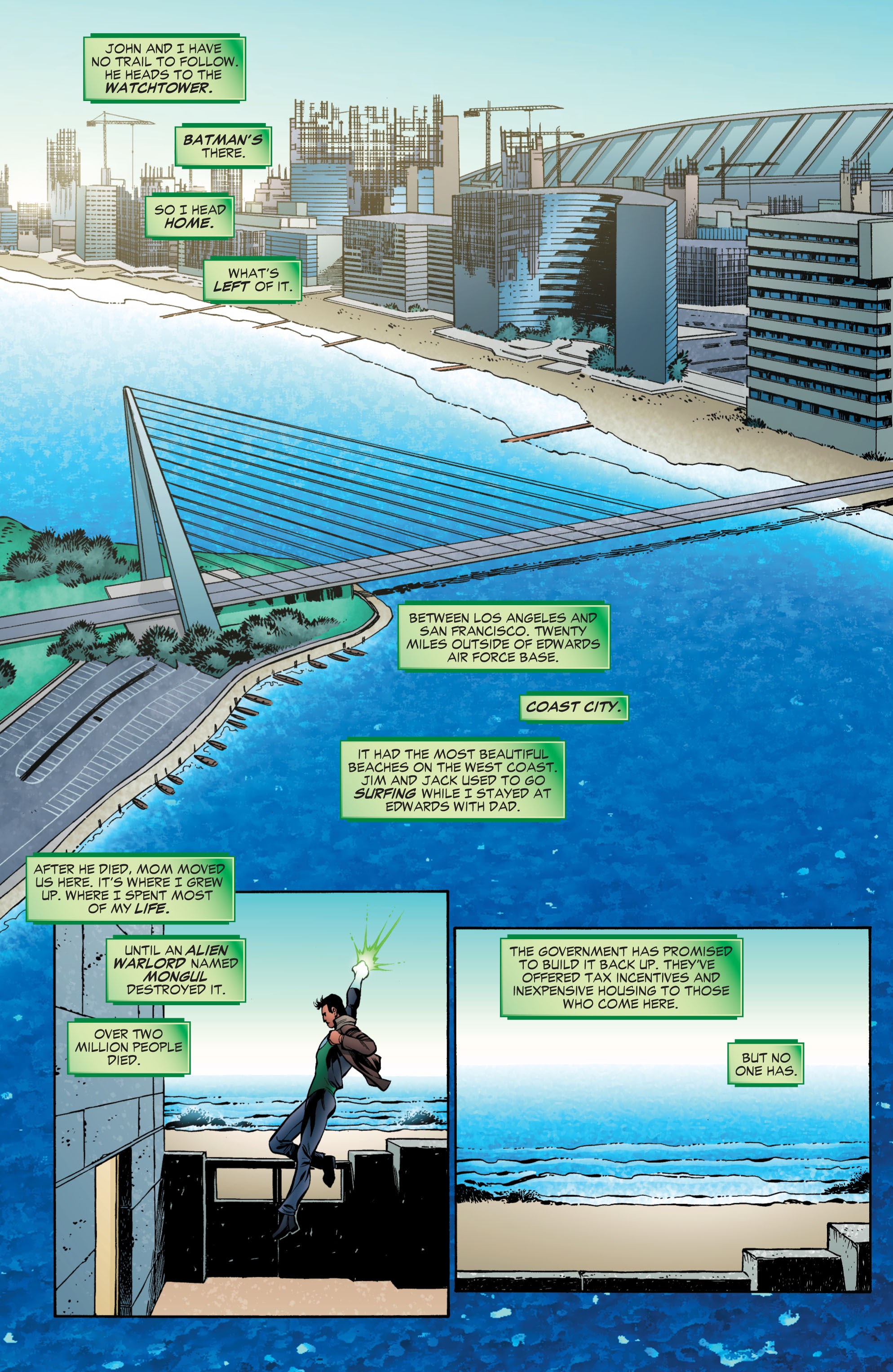 |
| Because I have. |
He is here to renovate and revitalize and capitalize on whatever is unique in your town. Will you like all the stores/stories and what's in them? You will not. But the renovator has created a new energy, a more stable infrastructure, and larger more diverse environment that permits new storefronts by other writers whose wares will interest you.
So to recap. In order for writers to 'just write good stories about the characters', we have to reach a consensus--or fight for a victory--on the idea of what constitutes good writing, in structure, style, content, and goals and what the characters (and their associated world-props) are, are like, and are capable of being and in such that way, even if not every character will appeal to every person, that every person should at least being able to find some significant characters that appeal to them.
It's not a hard goal to describe. Just a hard one to achieve.













-(duplicate).jpg)