Tuesday, October 04, 2022

The Lavender League

The Gay Bloggers Union has officially requested that I weigh on an issue I have been punting on, one of the truly novel phenomena in contemporary comics: the sudden proliferation of gay legacy characters.

Now, we have had gay characters before in the DCU, and not just fly-by-night ones.

Not quite what I meant. Besides, Mr. & Mr. Estate-Sale are hardly "in the DCU" as much as they are "owned by DC now and kept in the attic". You know it's true.

At first it was supporting characters, like The Great Extraño (1988), Maggie Sawyer (1988), Mitch Sekovsky (1989), Pied Piper (1991) Terry Berg (2000), Renee Montoya.  

We all love "Auntie" Gregorio (IN RETROSPECT), but let's not kid ourselves. Despite all the in-story hype, nobody really believed the "New Guardians" were going to amount to anything or even last long and we were right.  They just props in a miniseries to make a point about about diversity and bigotry.

I'm not counting all the revisionist bisexual box-checkers like Constantine, Ice (Maiden), Blue Starman, Cat-Man, Catwoman, Poison Ivy, Harley Quin, et al., because I think that's a different and much less significant phenomenon and if you'd like to argue about that, let's do.

But the first real high-profile DCU gay hero, of course, was Batwoman who was introduced in 2006 as a crime-fighting socialite (NOT yet Bruce Wayne's cousin; that was an ingenious retcon that happened in a later universal reboot, I forget which one-- so..many...reboots...).  

She had an immediate, widespread, and lasting impact on lesbian fashion.


There have been new gay characters with tenuous or no dynastic connections (e.g, Bunker, Anissa Pierce, Grace Choi).  There have been some pre-existing heroes now revealed to be gay, like the Tasmanian Devil, the Ray (current multiversal status uncertain?), or, most prominently, Golden Age Green Lantern Alan Scott and his son, Todd "Obsidian" Rice.  

That awkwardness when your date intercepts and misinterprets a hologram message from your actual dad, who happens to be a serious zaddy.

Prominent or not, such characters are still in the 'suburbs' of superhero-dom; they are on the edges of the real metropolises: the dynasties of DC's Big Iconic Heroes. That's the classic Justice Leaguers, of course: Superman, Batman, Wonder Woman; Green Lantern & Flash; Green Arrow & Aquaman. Arguably others could be included, but over time they are DC's most consistent roster of royalty.  

Characters like Batwoman and Alan Scott are certainly well known and pedigreed; they are definitely dukes and duchesses in DC's royal houses.  But they are not in the line of succession, so to speak; they will not inherit that seat at the Justice League table.

Who wouldn't want THAT thrilling opportunity to watch Hal stare at his own beautiful hands?


Naturally, NO ONE will actually inherit that seat, as repeated attempts to oust the original JLAers have proven over the years (including several recent spectacular failures).  "Batman/Superman/et al." aren't just costumes and skill sets, they are actual individuals. You can give the codenames 'Superman', 'Aquaman', 'Green Lantern', and 'Flash', to Jon Kent, Jackson Hyde, Girl with Weird Glasses, and Wally West (yeah, I went there), but that's all you are doing.  Superman is still Clark Kent, Aquaman is still Arthur Curry, Green Lantern is still Hal Jordan, and the Flash is still Barry Allen. Despite 70+ years of various creators/editors to 'fix' the "problem" they feel that consistency represents.

Nowadays we're not just talking about Odd Man's nephew, Queer Fellow, or Woozy Winks adopted pansexual son Flirty, or even some Black Canary-lite with short dark hair, butch skillz, big boots, a motorcycle, and a leather jacket, who immediate pair-bonds with literally the first available person she meets.

Waitaminute:
That IS Black Canary.

No. Now,  we are talking about the "heirs apparent".  We are talking about: 

Batman's protégé, Tim Drake.  A long-standing character (1989) who served as Robin--many believe as the best Robin--for twenty years. He's been buried in the background for years since Bruce Wayne's son Damian began his reign of terror as Robin (2009).  His recent emergence from Damian's shadow has coincided with the reveal of his bisexuality.

Uhhh...
13 does NOT look like the minimum age for that ride.

Aquaman's protégé, Jackson Hyde. A comparative new character (2016), son of Black Manta and a Xebellian rebel, Jackson was introduced as a gay teenager.  He seems to have had some trouble gaining traction, probably because his look, power set, and origin are clearly based on the "Kaldur'am" character in the Young Justice cartoon and yet... he is very much NOT that character.

For one thing, Jackson understands how important it is that Aquaman-characters have fabulous hair.


and Superman's instant-son, Jon Kent.  Through temporal shenanigans driven by fan-service, Clark Kent and Lois Lane wound up with a pre-pubescent 10 year-old son after some reboot (Convergence 2015) without they or readers having to slog through the real-world tedium of, you know, pregnancy and infancy and toddlerhood and childhood.

 I mean, any SILVER AGE writer knows those are the FUN part. Aren't those playsuits ADORABLE?

Jon's principal narrative function in the DCU seemed to be as saccharine poured over Damian Wayne stories to make them less bitter and easier to swallow.  As previously discussed, Damian's clearly on his way out of favor as l'enfant terrible among DC's editorship, so some more temporal shenanigans were employed to have Jon suddenly become a POST-pubescent 17-year-old son of Superman. Puberty came with the reveal of bisexuality (his love interest is male; that he is bisexual and not gay is known only through external evidence from the creator and publisher, not internal story evidence).


You know, Jon, I'm sure Jackson would be glad to go through a stylebook with you at Supercuts.
Heroes are here to help those in need, after all.

How do I feel about all this?

Let's discuss that tomorrow; but feel free to tell me your thoughts today.


Sunday, October 02, 2022

Our Heroes Have Always Been Above That Sort of Thing

A recent youtube video asked the question,

"Why do all superheroes sound the same?"

They don't, of course. What it really means is that "All Marvel superheroes sounds the same."  

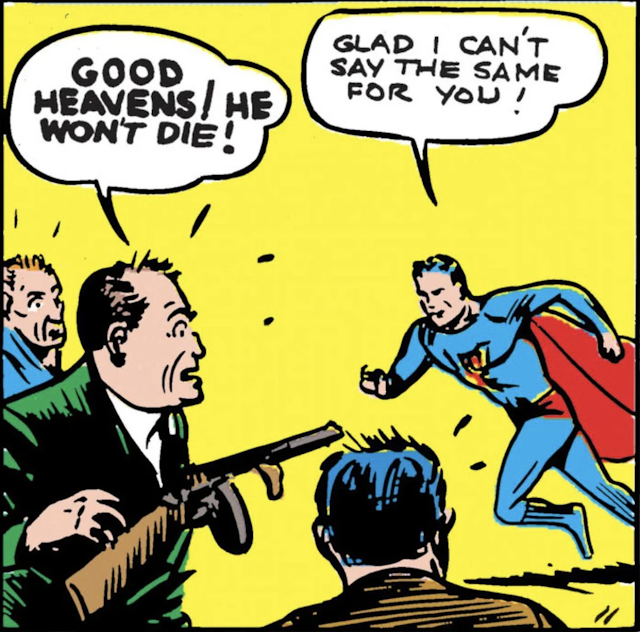
The other thing that won't die: comics-civilians lumping Marvel and DC characters together as if there's no difference.


I'll be frank with you: I didn't watch the video. Not one second. Why would you? You know the answer to the question and what they are going to say.  The only real interest is in how the question is mis-formed ("all superheroes" rather than "all Marvel superheroes").
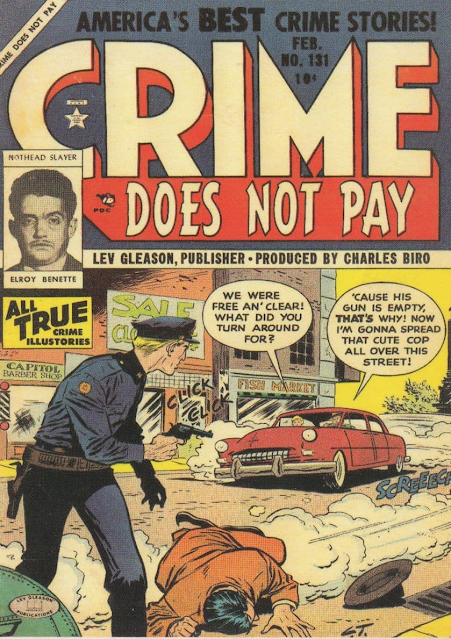
Can you imagine a world or era where Batman was a wise-ass?


A lot of the commenters (including me) point that out. Most blame the modern screenwriter(s) whose hallmarks are annoyingly sarcastic, wise-ass, quippy dialog. You know: Joss Whedon, Brian Mumblecore Bendis, Sam Raimi, James Gunn, Peter David, Keith Giffen; pick one (or more).  

Fortunately, DC heroes don't treat life-and-death situations flippantly like Marvel heroes do.


Certainly, there is some true in that. Buffy Masters has much to answer for. You can blame a particular writer whose style that got copied.  Or the style of an era (the '90s) coming to its full, monstrous fruition.  

Marvel fans put up with the childish joking of their heroes because as a validation of their own childishness.  It's sad, really.


Sadly, a lot of people who watch superhero movies haven't really read many of the comics that underlie those characters, so I tried to point out the comic book roots of the problem.  It's not merely that some modern comic books writer affect a quippy, snarky, flip style of dialog for all characters.  It was, in fact, a hallmark of early Marvel comics. 

It's one thing if Marvel  heroes want to joke with one another but REAL heroes do not joke with their foes. 


The DCU is a quilt, patched together from different characters created by different creators and a times in different styles, sometimes for different companies.  The Marvel superhero universe is an afghan, knit much more coherently with an intentional plan as an integral whole. 

Wise-cracking is just built into Marvel's historical DNA.


Each approach has pros and cons.  DC's Quilt Approach naturally brings variety and diversity, both in characters and styles, which means you have a chance to appeal to more people. 

Marvel heroes just don't take what they are doing seriously enough on a consistent basis.

It also offers separability and deniability!  If some contradictory development crops up between titles you can ignore it more easily.  If some title or part of your publishings doesn't work, you can cut it out entirely, and probably patch it up easily.

Some quippy characters? Sure. But it's EVERYONE in Marvel, making it tedious and oppressive.


Marvel's Afghan Approach offers coherence and consistency. If read something in one comic, you know it 'counts' in every other; if you liked Title A, you will probably like Title B.  Its world-building is organic and, well, more seamless.

Only Marvel heroes go for the wisecrack rather than use their powers judiciously.

One of the cons of the integral approach is that a "house style" can be suffocating and unnatural.  Everyone looks the same and sounds the same, which isn't how people are.  Or, at best there's a small handful of speech patterns assigned based on which stereotype a character most clearly aligns with.  

I think it's the sarcasm, the snarkiness of Marvel characters that really irritates me. Make mine DC.


If you want to know what those are just read any Jack Kirby story with Fantastic Four or the Newsboy Legion; I'd rather not suffer through them here.

I'm safe from that sort of non-stop meaningless prattle in DC stories.


But it just doubles-down on the point: "all Marvel superheroes in the movies talk the same because they are MARVEL heroes."  To the degree DC heroes do that in movies, it's because writers are aping Marvel writers (or because Marvel writers have been hired to WRITE DC heroes).  

Marvel can't even manage to allow its cosmic figures maintain their seriousness and dignity.


It's certainly not because DC heroes naturally or historically speaking with that annoyingly sarcastic, wise-ass quippy dialog style.


At least Marvel manages to avoid the lowest form of humor: puns.

Thursday, September 29, 2022

Mickey Rooney = KJ Apa

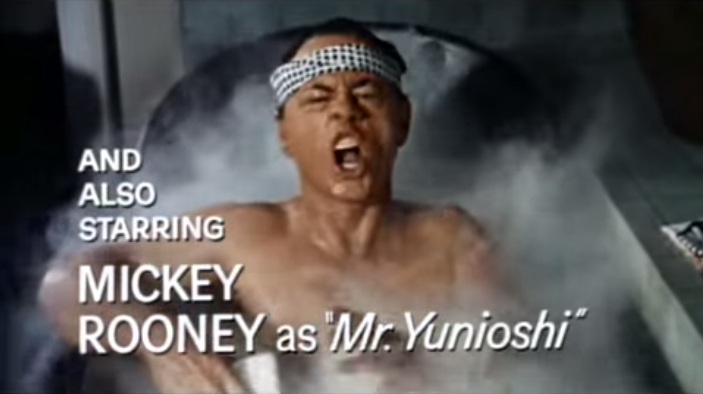
 I had to explain to someone the other day that, from a comic book perspective, this person

Even through this 40-year-old screen cap, you can sense how terrible he is.

is the same as this person.

Even through this five-year-old screen cap, you can sense how confused he is.

If you don't understand, you will soon. If you do, sit back and enjoy the ride anyway.

The bottle ginger is, of course, Keneti James Fitzgerald Apa, a.k.a. KJ Apa (see below auditioning for the role of "Flower" in DC's Sgt. Rock's Easy Company).

Don't get confused; the "a.k.a" is not part of his name. If it were, it wouldn't have periods. For some reason.

Like Dwayne Johnson, Apa is half-Samoan. Unlike Johnson, his name reflects this much more strongly than his appearance, but the fact that his hair's been dyed cartoon-red for most of the last five years hasn't helped.

A Samoan village Savae (chief), in fact, with all its epic highs and lows.


It's been dyed cartoon-red, of course, because he's been playing literature's greatest monster, Archie Andrews.

ARCHIE IS.
ALL HAIL THE DESTROYER OF WORLDS.

KJ Apa is, by all accounts, a nice (if a bit odd) young person who tries hard to maintain his dignity while starring in, how do we put this, not the most respected show on television.  

Oh, sure, it's easy to make fun of it when Archie gets attacked by a bear, but when twee pretentious Leonardo DiCaprio does it, HE gets an Oscar.

You go, KJ; all the best to you.

This, on the other hand, is Mickey Rooney.  

Even for Mickey, he was unusually upset on this occasion.

Talk about epic highs and lows. Mickey Rooney had a very long career as a character actor (at 5'2", he wasn't going to be a leading man in oldtime Hollywood), living to be 93 (despite a truly tumultuous personal life).

The earlier pic is from his 1981 sitcom when he was only, um, 87? 72? 63? 52? 44?
Who can tell, he always looked like that.


It co-starred Dana Carvey, as his grandson, when Dana Carvey was still hot.

And Nathan Lane, as Carvey's roommate, when Nathan Lane still looked ....
exactly like Nathan Lane always looks.

All articles about Rooney will quote Hollywood royalty saying he was One of Hollywood's Greatest Actors.

"Least Cautious", certainly.

Um. Okay, Hollywood; you're entitled to your opinion, although I've never met a regular person who shares it. He seemed like a shouting, scenery-chewing vaudevillian in everything I ever saw him in, and I don't mean that as a compliment.

I don't mean to deny the man his due, mind you.

He was a main player in It's a Mad, Mad, Mad, Mad World, after all, and that always counts for something.

If nothing else, he made possible the line: 
"What could go wrong with an Old Fashioned?"

And he was in Pete's Dragon, which was fun.

Why not just hire an actor who naturally hallucinates dragons already?

But his real impact was his early work as a child star when he starred in sixteen (!) films as Andy Hardy, the personification of American teenage wholesomeness and good intentioned earnestness. And Andy Hardy...

As personified by young(ish) Mickey Rooney


Archie Andrews (first appearance). Or 'Chick", as his friends never ever call him, not even once, in 80 years.


So KJ Apa is playing Archie Andrews who is based on Andy Hardy as played by Mickey Rooney. Now you know.

P.S. There is one other odd fact I noticed while writing this.  I refuse to let it creep me out. 

Much.

Among his many roles, in the Rankin-Bass's stop-motion special "Santa Claus is Comin' to Town",  Mickey Rooney played Kris Kringle who, impossible though it is, appears to have been based exactly


"No, really... a bear!"
on KJ Apa.

Pictured: end game.


Monday, September 26, 2022

The League of Super-Pets

I'm happy to say:

I was completely wrong.

I expected League of Super-Pets to be awful. It was, in fact, a delight, pretty much from start to finish. I didn't realize it was from the same people who did the Lego Batman movie or I might have been more optimistic.

The voice-casting was mostly great. Except for Lex Luthor; I can only assume whoever Marc Maron is has enough of his own brand that he got to play himself more than Luthor, because Lex's diction is much better than that. Heck, his guinea pig's diction was better than that.  Aw-shucks Krasinski is a very believable farm-boy Superman, whoever Olivia Wilde is nailed it as Lois Lane, Dwayne Johnson & Kevin Hart (who should really just get married at this point) were endearing rather than annoying, Bayer was a very pleasant pig, and Keanu Reeves as Batman, well, do I really have to say anything about that? 

World treasure Jameela Jamil didn't have a lot of lines as Wonder Woman but her, "You; porcine creature!" sold me completely and was worth the price of admission. For a while, I thought we had a breakthrough with our First Gay Super-Pet, but then I realized that they made Merton the Turtle female (probably just to get Natasha Lyonne, or perhaps for gender balance, since there aren't a lot of fans like to get bent out of shape about changes to Merton McSnurtle canon).

Besides: multiverse/hypertime <waves hand>

The plot was solid, its internal logic consistent, as were characterization and motivation. The threat(s) were real; the action palpable.  It's not easy to make super-powered guinea pigs threatening, but, hey, anything that takes out the Justice League automatically gets respect.  Are there a lot of surprises? Of course not.  But is that really what you are clicking that button for? I mean, if "super-power guinea pigs defeat the Justice League" isn't enough of a surprise for you, that's on you.

I very much appreciated that despite his superpowers and intelligence, Krypto is still emotionally just a dog, with the pros and cons that come with that. While the rest of the super-pets may seem like a hodgepodge, they line up well with the respective heroes they 'represent'. Chip the squirrel (obviously the Green Lantern analog) is incapacitated by paralyzed by imagining worst-case scenarios (a sort of fear).  Wonder Woman fan PB the pig (a reference to the JLU episode where WW turns into a pig) has faith in everyone except herself and needs some self-confidence.  Ace (the eventual Bat-Hound), is resilient, protective of others, and has lost his family as a puppy. Merton is fast, but has trouble looking before she leaps.  Krypto has yet to learn an important lesson that Superman has already learned but I'll let you watched the movie for that.

For comics readers like me, the movie was chockfull of visual references to in-universe DC entities.  Big Belly Burgers, Ferris Air, (Jonah) Hex Steakhouse, Jitters, Kord Industries, the Metropolis Meteors, O'Shaughnessy's, Gingold soda, Catwoman (the Broadway show), Starfire Express (the Broadway show), Sun Dollar coffee, Bruce Wayne menswear, S.Kyle jewelry, Taco Whiz, Chocos, Janus Cosmetics... I lost track.

On the whole, I appreciated the character designs. The black-background "S" for Superman's logo was a nice Golden Age touch.  Wonder Woman looked like, well, an Amazon, and Green Lantern Jessica Cruz was winningly zaftig.  Flash was clearly a runner, not a brawler.  Cyborg...

This line of his alone justifies making the entire film.

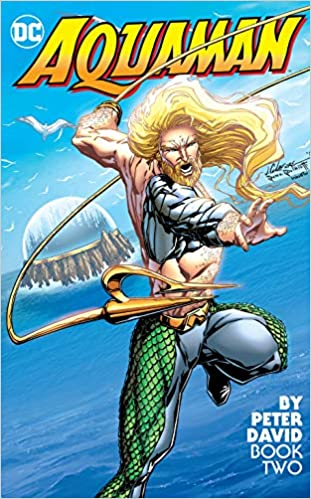
Aquaman was oddly off-model.  It seemed like they were trying for some sort of amalgam of various versions and it failed pretty badly (both visually and in personality).  I mean... a harpoon hand? For Poseidon's sake, what year is this? How is that going to be anything but wildly confusing for someone who wasn't reading Aquaman comics 25 years ago?

But he is on the screen very little; most of the heroes are.  In this film, the pets save the day, as I'm sure they all dream of doing. I hope you enjoy the film as I did.

Friday, September 23, 2022

Dazzler & Aristotle Teach You to Just Write Good Stories

A thoughtful anonymous commenter ("AC") on this blog recently said (in reply to a recent post about mishandling of DC characters under Dan Didio), 

"This probably sounds like a hopelessly simplistic take on comics, but I swear it makes sense to me: just write good stories about your characters."

The comment was so heartfelt that it seemed like it merits a reply-in-post, rather than by comment.

As Plato pointed out, "No man knowingly does evil". 

Then again, Plato never met Tom King.


I'm sure that writers of bad stories think they ARE writing "good stories". That's why "just write good stories about your characters" sounds hopelessly simplistic to you (and me). But there is still wisdom to glean from it.


1. We need to define what constitutes "good". That's part of what this and many of my other posts (such as my screeds against decompression) try to help do. 

Sometimes we have to do that by process of elimination: identifying elements that make stories bad. It's why so much fandom--not merely of comics but in general--focuses on negative criticism. It's a natural (if unpleasant) tool in the search for The Good.  Because if years spent reading ancient philosophy teaches you anything, it's that "The Good" can be difficult to define quickly and succinctly.

"Just write good stories" runs smack into the wall of that conundrum of ancient philosophy: "What is The Good?"

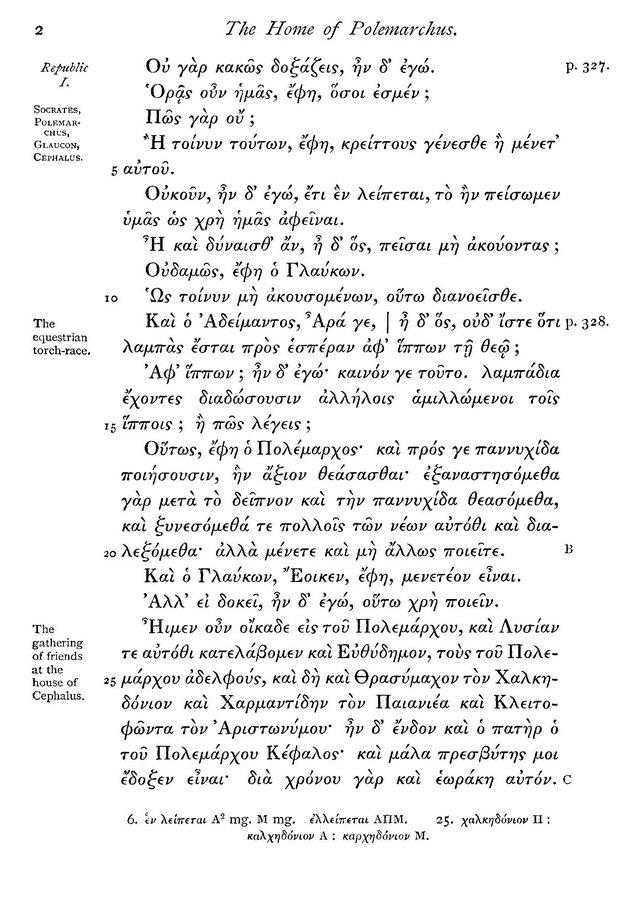
Just like reading Plato's "Republic", which I don't recommend because it'll give you a headache and make you angry.  VERY decompressed. Lots of jabbering, no action. Pointless "character moments" with characters who are jerks anyway. You can just read Bendis et al. for that.

Is adhering to the structural basics of storytelling (as discussed in our next point) "good writing"? I don't think so. I mean, you can drive a car perfectly well, but still use it to do evil things; so, too, with stories.

I learned that from Dr. Wertham.

When the Joker had his own comic book series in the '70s, one of the problems was that the Comics Code--or, if nothing else, the zeitgeist at the time--insisted that the villain not be allowed to get away at the end of the story. So EVERY ISSUE ended with the Joker getting captured (or the implication that he was about to be captured).  That's because The Powers That Be felt that a "good story" couldn't end with a villain escaping.  Is that something we would all agree on today?

There are other examples where time and place shift what is considered "good" in a story, but instead let's consider character.  Some readers feel that good stories will always show Bandanaman acting in character ("Bandanaman would never use a Kleenex; it's against his code."). Some reader feel that good stories show that Bandanaman isn't perfectly predictable; that would make him and his stories boring ("Did you see what Bandanaman did this month?!"). Some readers feel that good stories show that Bandanaman is neither predictable nor unpredictable, but adaptive, and make his choices depending on the situation at hand. ("What do you think about Bandanaman's difficult decision this month?")  

But does anyone care about what Bandanaman thinks...?

What about taste?  I love me some Jonah Hex, the DCU's standout weird western character. The dark ironies, the poetic justice, the small but deep personal drama with an ever changing landscape of characters. 

And there's some special appeal in brawny bondage and branding, done tastefully.

But others readers do not like those things. To them, the very elements that make a Jonah Hex story good to me are what make it a bad story to them. So, to them, there can be no 'good Jonah Hex story', unless you write one that discards those elements, making it so out of character that a reader like me would say it's 'not a Jonah Hex story at all'. 

I mean, it's not like you can send him into a post-apocalyptic future, or have him befriend Justice Leaguers, or hang out with Space Cabbie.

I could continue, but I hope you get the point. "Good" is a great concept in the abstract, but it falters as a yardstick for the concrete.  Yes, it would be good if everything were just... good.  But good is not the same thing in every case, at all times, for every person.  

That's not to say that "good" is meaningless as a goal for stories. But we must accept that it is more of a question than it is an answer.

If only I could think of an appropriate philosophical comic book reference for this point.

2. We need (believe it or not) to continue to define (or at least re-emphasize) what a STORY is. You'd think Aristotle would have covered that sufficiently in The Poetics, but I guess everything needs rebooted for a new millennium.

I do recommend The Poetics, which will not give you a headache or make you angry. Unlike SOME ancient philosophers, Aristotle knew how to keep it tight.

Stories have a comprehensible plot, Grant Morrison.
Stories have someone to root for, Garth Ennis.
Stories have a point to them, Brad Meltzer.
Stories have a beginning, middle, and an end, Geoff Johns.
Stories have diction with clarity, Brian Mumblecore Bendis.
Feel free to continue this list without me...

These are all necessary to making a story.  But note (as discussed in point 1) they do not necessarily or automatically make a story good.

If they did, then Dazzler would be the perfect Aristotelian character.

3. The word "your" in the sentence is a major problem. In fact, it may THE major problem for many modern comics writers. THE CHARACTERS AREN'T THEIRS. They aren't "your characters" Mr/Ms. Writer; they are "the characters". 

Just ask them.


They do not belong to you. Not legally, historically, culturally, or creatively. They are on loan. They exist already. Many of them, as I pointed out in a recent post, were created before you were,  Many will be around long after you are gone. 

I learned that from Mr. Mxyzptlk. 

Your job is to tell stories with the characters, not alter them, and many writers simply can't or won't color within those lines.  

When a writer is assigned (or actively chooses!) a character they often have (or are assigned!) the goal of making the character more popular. Sales matter, after all.  So they may think, "Why don't some readers like this character? What can I do to make Readers-Who-Do-Like-This-Character like this character?"  Since they can't change the readers... they change the character. Maybe they themselves never liked the character; maybe they chose the character because they thought it needed to be changed. 

Peter David never MET a character he thought he couldn't improve by simply changing it into a completely different one of his own invention with the same name.  If "Tarzan/Namor/Captain Hook rip-off' counts as 'his own invention'.

It's a natural impulse. It's also usually wrong.  If your car doesn't work, trying to turn it into a boat won't either. Just invest in fixing the damned car, or junk it.

Either the character (or group, world, set-up, etc.) are intrinsically, conceptually flawed (in which case, it should be abandoned) or it hasn't been handled correctly (or its past handling is no longer correct with changing times).  The answer in the latter case is to handle the character correctly, not alter them essentially.  If you change the character so severely that it now appeals to the people who didn't like it before, you are nearly certain to lose the people who liked it in the first place because you've now abandoned its original elements.  

You how do you handle such a character correctly? You can grow them. You can expand them. You can extrapolate them and their worlds in logical ways consistent with their themes, history, and generally accepted personality and relationships.  

This is why, although Geoff Johns has some flaws in the structure of his writing, and sometimes he's willing to write violence graphic enough to be contrary to the taste of some readers, I still consider him a very good writer to be emulated as much as possible.  Geoff Johns knows how to handle characters and their worlds correctly: neither with stifling reverence, nor with revisionist contempt.  

Just read Jane Jacobs, people. Urban revitalization is the perfect metaphor for, well, most things.

He is not here to preserve your old downtown in lucite as a tourist attraction of times past, nor is he here to raze it to make way for some putatively superior shopping-mall of the future.  

Have you noticed that one of the first things Johns does when (re-)establishing a character is (re-)establishing their unique urban environment?

Because I have.

He is here to renovate and revitalize and capitalize on whatever is unique in your town. Will you like all the stores/stories and what's in them? You will not.  But the renovator has created a new energy, a more stable infrastructure, and larger more diverse environment that permits new storefronts by other writers whose wares will interest you.

So to recap. In order for writers to 'just write good stories about the characters', we have to reach a consensus--or fight for a victory--on the idea of what constitutes good writing, in structure, style, content, and goals and what the characters (and their associated world-props) are, are like, and are capable of being and in such that way, even if not every character will appeal to every person, that every person should at least being able to find some significant characters that appeal to them.  

It's not a hard goal to describe. Just a hard one to achieve.